Data Center Certifications & Compliance | Colocation Indonesia
Compliance by Design: Understanding Data Center Certifications
Standards and Trust
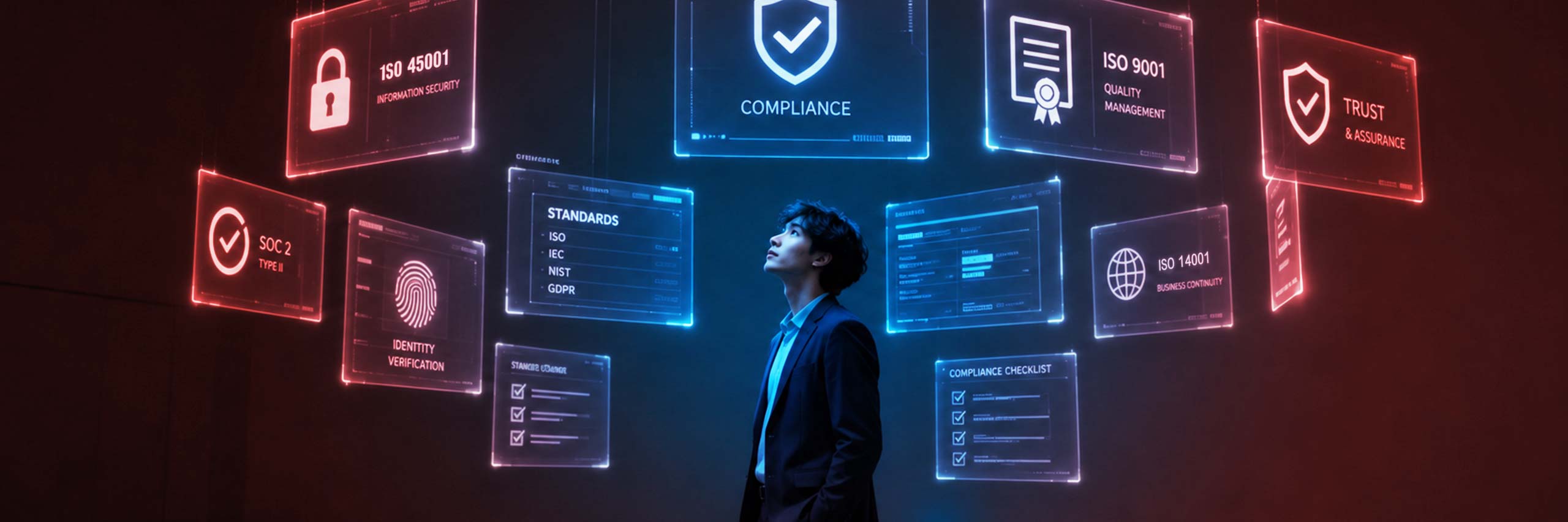
For businesses operating critical digital infrastructure, reliability is only one part of the decision-making process.
Organizations also need confidence that the facilities supporting their systems are designed and managed according to recognized standards.
This is why certifications have become an important consideration when selecting a data center.
International standards such as ISO certifications, Uptime Institute Tier classifications, PCI DSS, and SOC 2 provide structured frameworks for evaluating different aspects of infrastructure, operational processes, management systems, and controls.
For organizations considering a data center company in Indonesia, understanding what these certifications mean, and what they do not mean, can make infrastructure evaluation more informed.
Why Certifications Matter
Data center certifications should not be viewed simply as badges displayed on a website.
Each certification or standard addresses a particular area of organizational or infrastructure performance.
For example, an ISO certification may relate to a management system, while an Uptime Institute Tier classification focuses on specific characteristics of data center infrastructure and availability.
The practical value comes from understanding how each standard relates to a customer's requirements.
A financial institution may place greater emphasis on payment-related requirements. An enterprise may prioritize availability and business continuity. A multinational company may need internationally recognized management standards.
The right combination depends on the workload and business context.
Understanding Uptime Institute Tier Ratings
Uptime Institute Tier classifications are among the most recognized frameworks used when discussing data center availability.
The Tier system provides a structured way of evaluating data center infrastructure based on design and operational characteristics.
NeutraDC's Jakarta footprint lists Uptime Institute Tier III and Tier IV certifications across its facilities, including Tier III Design, Tier III Facility, Tier III Operation Rating Gold, and Tier IV Facility certifications.
The distinction between design, facility, and operational certifications is important.
A design certification evaluates the planned infrastructure architecture. A facility certification relates to the constructed facility, while operational sustainability recognition addresses how the facility is operated and maintained.
For customers, these distinctions provide a more meaningful picture than simply seeing the word "Tier" without context.
ISO 9001: Quality Management
ISO 9001 focuses on quality management systems.
For a data center environment, quality management can support consistency in processes, service delivery, documentation, and continuous improvement.
The standard does not guarantee that every individual customer experience will be identical. Instead, it establishes a framework for how quality-related processes are managed.
NeutraDC's Jakarta infrastructure lists ISO 9001 among its recognized certifications.
For organizations evaluating a data center company in Indonesia, this type of certification can provide an additional reference when assessing operational maturity.
ISO 27001: Information Security Management
ISO 27001 establishes a framework for information security management systems.
For data center customers, it can be relevant when assessing how information security risks are addressed through structured management processes.
It is important, however, not to interpret ISO 27001 as a guarantee against every possible security incident.
Instead, the standard provides a systematic framework for identifying, managing, and continuously improving information security practices.
NeutraDC lists ISO 27001 across relevant facilities in its infrastructure portfolio, including Jakarta and Batam.
ISO 14001: Environmental Management
Environmental considerations are increasingly important in data center planning.
ISO 14001 provides a framework for environmental management systems and helps organizations structure how environmental aspects are identified and managed.
This becomes particularly relevant as the industry focuses on energy efficiency, resource management, and responsible infrastructure development.
For organizations evaluating a green data center Indonesia environment, ISO 14001 can therefore be one useful indicator to consider alongside facility design and sustainability initiatives.
NeutraDC's Jakarta and Batam facilities list ISO 14001 among their certifications.
ISO 45001: Health and Safety
Data center infrastructure involves significant physical environments, electrical systems, mechanical equipment, and technical operations.
ISO 45001 focuses on occupational health and safety management.
For a facility operator, structured health and safety management is relevant not only for employees but also for contractors, visitors, and other people interacting with the facility.
NeutraDC lists ISO 45001 within its Jakarta and Batam certification portfolios.
PCI DSS and Payment-Related Environments
Organizations operating payment-related systems have additional considerations.
The Payment Card Industry Data Security Standard (PCI DSS) provides requirements designed around environments handling payment card data.
For customers, the presence of PCI DSS-related certification or assessment can be relevant when determining whether a facility aligns with their payment infrastructure requirements.
NeutraDC's Jakarta and Batam facilities list PCI DSS-related certification or compliance within their published standards.
However, customers should always assess their own compliance responsibilities. A data center certification does not automatically make every customer application compliant.
SOC 2 Type II and Operational Controls
SOC 2 Type II is another important reference for organizations evaluating technology and service environments.
Unlike a simple point-in-time assessment, Type II reporting considers the effectiveness of relevant controls over a period of time.
NeutraDC's Jakarta and Singapore facilities list SOC 2 Type II among their published standards and certifications.
For enterprise customers, this can provide additional context when evaluating operational controls and governance requirements.
Again, customers should distinguish between the controls covered by the certification and their own responsibilities.
Certifications and Business Risk
The broader value of certifications is that they can help organizations structure their infrastructure evaluation.
Instead of asking only, "Is this data center reliable?", businesses can ask more specific questions:
-
What availability classification applies?
-
Which management systems are certified?
-
What environmental standards are in place?
-
Does the facility support relevant payment requirements?
-
What operational controls are independently assessed?
-
Which certifications apply specifically to the facility being considered?
This creates a more objective framework for comparing infrastructure providers.
Certifications Do Not Replace Due Diligence
Certifications are valuable, but they are not the only factor organizations should evaluate.
A complete data center assessment may also consider:
-
Facility location
-
Power architecture
-
Cooling design
-
Network diversity
-
Physical security
-
Scalability
-
Connectivity ecosystem
-
Business continuity arrangements
-
Operational support
For colocation Indonesia customers, this broader evaluation is particularly important because infrastructure requirements can vary significantly between workloads.
A certification should therefore be treated as one component of a larger infrastructure assessment.
Standards Across a Regional Infrastructure Ecosystem
As businesses increasingly operate across Southeast Asia, consistent standards become even more relevant.
Organizations may have infrastructure requirements spanning Indonesia and Singapore.
NeutraDC Singapore publishes a portfolio that includes ISO 22301, ISO 27001, ISO 45001, ISO 50001, PCI DSS, SOC 2 Type II, Uptime Institute Tier III and Tier IV-related certifications, and BCA Green Mark Platinum.
Meanwhile, NeutraDC Batam lists LEED Gold, ISO 27001, ISO 14001, ISO 45001, PCI DSS, and Uptime Institute Tier III Design and Facility certifications.
This illustrates how different locations may carry different certifications according to their respective infrastructure and regulatory environments.
Building Trust Through Transparency
Trust in digital infrastructure is built through more than marketing claims.
Clear information about certifications, facility standards, infrastructure architecture, and operational practices enables customers to make better-informed decisions.
For a data center company in Indonesia, transparency around standards can therefore become an important part of the customer relationship.
A hyperscale data center NeutraDC environment combines infrastructure scalability with a framework of recognized standards designed to support different enterprise requirements. The objective is not to suggest that one certification solves every risk, but to provide customers with meaningful reference points when evaluating infrastructure.
Looking Ahead
As digital workloads become more critical to business operations, infrastructure decisions will increasingly involve technology, governance, compliance, and risk management together.
Certifications such as ISO, Uptime Institute Tier classifications, PCI DSS, and SOC 2 provide different lenses through which organizations can evaluate data center environments.
For businesses considering colocation Indonesia, the most effective approach is to understand what each certification covers, how it relates to the intended workload, and how it fits within the organization's own compliance framework.
Ultimately, trust is built through a combination of recognized standards, reliable infrastructure, transparent practices, and continuous operational discipline.
That combination provides the foundation for organizations to deploy and scale digital workloads with greater confidence.
- Share
Related Articles

Data Center Certifications & Compliance | Colocation Indonesia

AI, Analytics & Big Data Infrastructure | Data Center Indonesia
